


Patient Age Not the Only Factor to Consider When Contemplating Percutaneous Coronary Intervention
In an accompanying editorial, Michael G. Nanna, MD, MHS, from the Section of Cardiovascular Medicine at Yale School of Medicine in New Haven, Connecticut, and colleagues concurred that several factors can modify the benefit of PCI for older adults. Besides osteoarthritis, “many older patients have multiple chronic conditions that can affect symptoms and outcomes more than coronary disease itself,” he said.
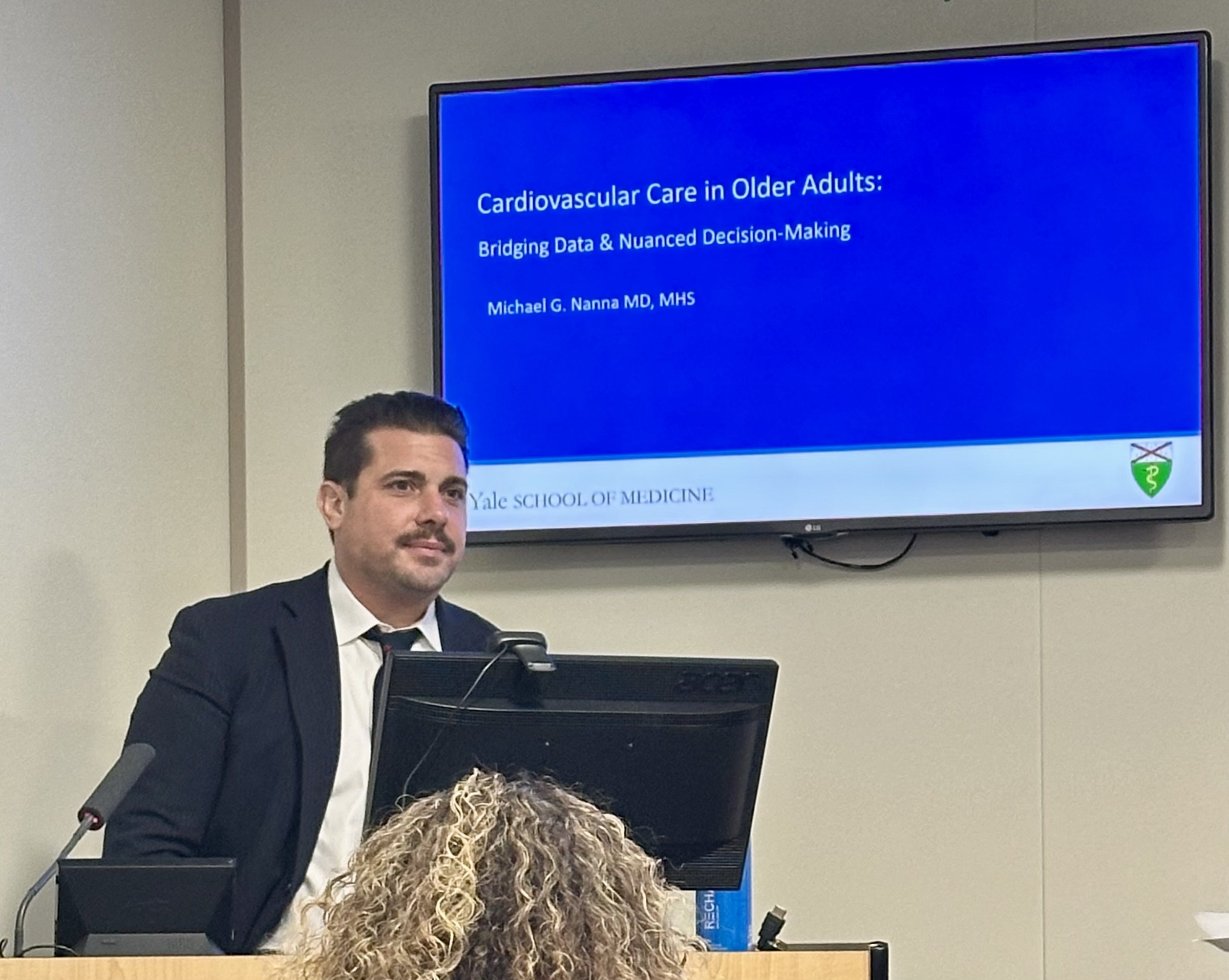
Dr. Nanna invited speaker – Northeastern Pepper SPARK Seminar Series
The HeartWise Lab was proud to participate in the Northeastern Pepper SPARK (Scholars Pursuing Aging Research and Knowledge) Seminar Series at the UConn Pepper Center. Dr. Nanna shared insights on "Cardiovascular Care in Older Adults: Bridging Data and Nuanced Decision-Making".

HeartWise leadership leads AHA Scientific Statement
Dr. Damluji (Chair) and Dr. Nanna (Vice-Chair) led the American Heart Association Scientific Statement, Coronary Artery Revascularization in the Older Adult Population: A Scientific Statement From the American Heart Association.

HeartWise at AHA 2025
The HeartWise Team was proud to represent the lab at the American Heart Association Scientific Sessions 2025, participating in scientific discussions that highlighted emerging research, clinical innovation, and evidence-based strategies to improve cardiovascular outcomes. Our presence at AHA reflects HeartWise’s dedication to advancing rigorous research and translating evidence into meaningful clinical impact.
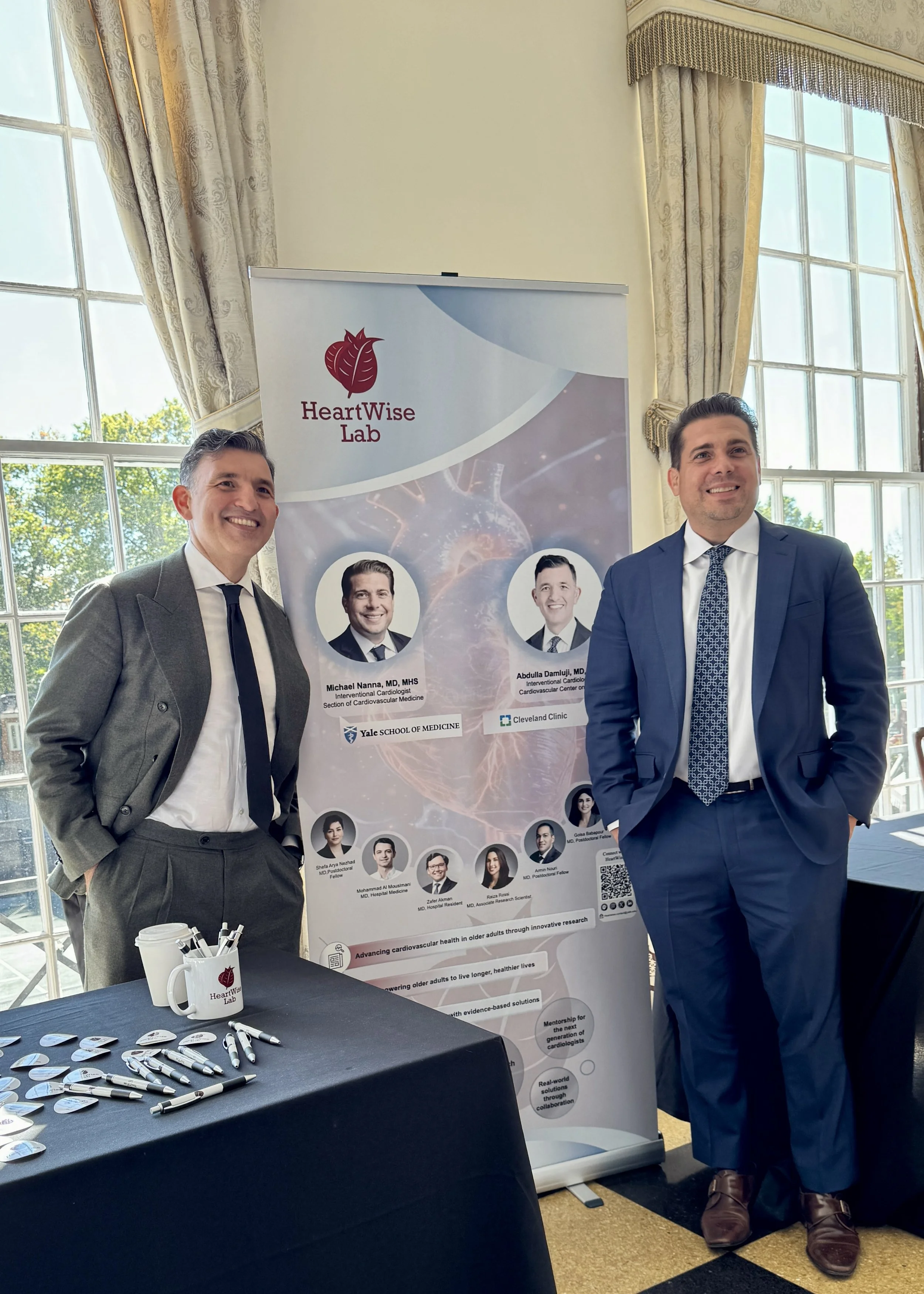
HeartWise at the Yale Interventional Cardiology Symposium 2025
The HeartWise team attended the Yale Interventional Cardiology Symposium, where Dr. Damluji served as a keynote speaker and Dr. Nanna delivered a talk and moderated multiple sessions. We were proud to see lab leadership actively contributing to dialogue, collaboration, and education aimed at advancing interventional cardiology and improving cardiovascular outcomes.

Is your heart older than the rest of you?
In an editorial in the journal that featured the new study, Drs. Mohammad Al Mouslmani, Abdulla Damluji, and Michael Nanna wrote that a calculator could have good or not-so-good effects.

PCI reduces mortality after STEMI in older adults
The use of percutaneous coronary intervention after ST-segment elevation myocardial infarction is increasing in older adults, and is associated with significantly lower in-hospital mortality, new research has found.
Unblocking arteries after heart attack may be lifesaver for older patients
Among heart attack patients 75 years and older, the oldest of those patients were less likely than younger patients to receive a procedure to open blocked arteries.

Special Handling Needed for Seniors in Cardiac ICU
Seniors in cardiac intensive care units may suffer delirium and other problems if doctors only focus on their heart, a new American Heart Association (AHA) scientific statement says.

Too Many TAVR Centers Are Clustered Around Well-to-Do Communities
The proliferation of transcatheter aortic valve replacement (TAVR) programs in the U.S. was largely limited to metropolitan areas and hospitals serving relatively affluent patients, a study found.

Hearts and bodies change with age, heart disease treatments may need to change, too
New American Heart Association Scientific Statement reviews age-appropriate care for people ages 75 and older hospitalized with heart attack or chest pain

News Daily NewsAnother Win for PREVENT, This Time in Older Adults
The tool is less apt to overestimate ASCVD risk than the pooled cohort equations and in turn could reduce over treatment.

Should You Drink Alcohol on an Airplane?
Research suggests there are risks to imbibing on a flight, especially for some older travelers

AHA updates guidelines for diagnosing, treating heart attacks in older adults
Some tests have been found to be used far too often, at little benefit.

The use of percutaneous coronary intervention after ST-segment elevation myocardial infarction is increasing in older adults, and is associated with significantly lower in-hospital mortality.
The panel voted overwhelmingly in favor of safety, but quibbled about efficacy, durability, and benefits versus risk.

Heart checkups you should have and those you can probably skip
Some tests have been found to be used far too often, at little benefit.

How Old Is Too Old for a Heart Bypass?
Perspectives have changed over the last couple of decades for a simple reason: Surgeons are getting better at coronary artery bypass grafting (CABG), the most common type of bypass, with roughly 200,000 performed in the U.S. annually.

Heart Attack Deaths Drop, but Other Heart Risks Climb
Fewer people are dying from heart disease compared with previous decades, but it still remains the No. 1 killer

Beliefs About Statins, Trust in Doctor Affect Statin Prescription Disparities by Race
Statin under prescribing in African Americans was attributed not only to demographic and socioeconomic factors in a large registry study but also seemed related to greater misunderstanding of statin safety and efficacy and mistrust of their physicians compared with white patients, a new analysis suggests.

ACS Care in Older Patients Entails Unique Risks, Shifting Goals, Says AHA
Geriatric syndromes influence therapeutic choices and impact outcomes, says Abdulla Damluji, who chaired the new statement.